
Winner Digital Limited: Understanding Consumer Electronics and Digital Technology
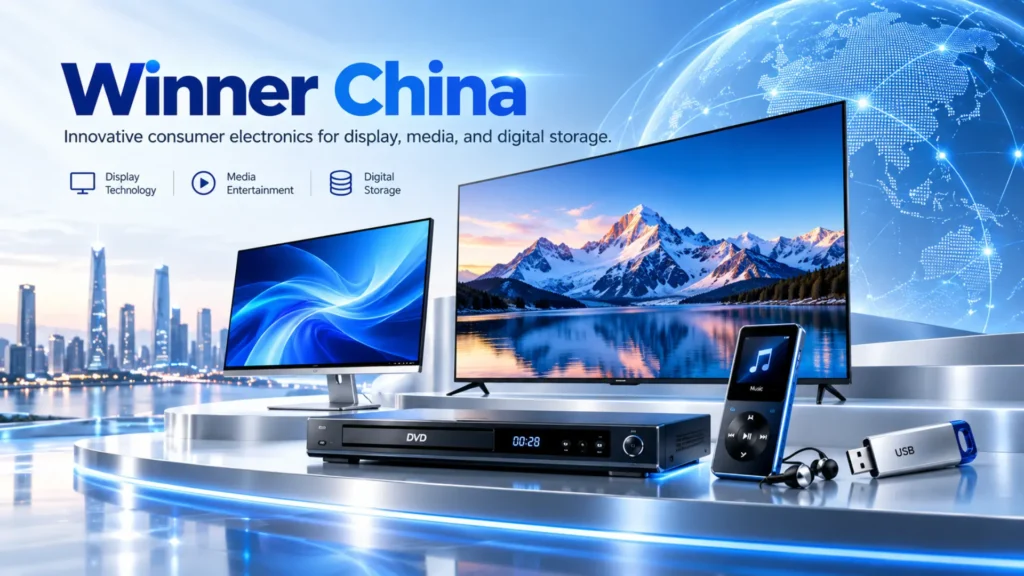
Winner Digital Limited or winnerchina is identified in its historical website material as a business associated with the development of consumer electronic products. The product categories described include LCD televisions, computer monitors, DVD and VCD players, MP3 players, and USB storage devices. These technologies represent an important period in the development of digital entertainment, personal computing, and portable data storage.
Each category serves a different purpose, from displaying visual information and playing recorded media to storing digital files for everyday use. The growth of these devices was closely connected to advances in electronic components, digital signal processing, and manufacturing methods. Understanding how these products work provides useful background on the technologies that shaped consumer electronics during the transition from analog equipment to digital systems.
Consumer electronics have changed significantly as digital technology has become more accessible and widely adopted. Televisions and computer monitors have moved from bulky cathode-ray tube designs toward thinner flat-panel displays, while home entertainment equipment has gradually shifted from physical playback formats to digital files and network-based services.
Portable music players demonstrated how audio compression could make large music collections easier to carry, and USB flash drives introduced a convenient way to move information between compatible devices. Despite the differences between older and newer equipment, fundamental considerations such as electrical safety, display quality, storage reliability, and device compatibility remain important. Examining these developments helps explain both the historical significance of earlier electronic products and the technical principles still used in modern devices.
Contents
Consumer Electronics and the Transition to Digital Systems
Consumer electronics include electrical and electronic devices designed for personal use, entertainment, communication, and access to information. Digital technology made it possible to represent sound, images, and other information as numerical data that electronic processors could store, manipulate, and reproduce. This approach supported the development of compact media players, digital televisions, computer peripherals, and removable storage products. Unlike analog signals, digital information can be copied and processed with predictable results when the data remains intact, although compression, conversion, and transmission methods can still affect the final output.
Improvements in integrated circuits also allowed multiple functions to be combined within increasingly compact products. Over time, dedicated hardware for individual tasks became more closely connected through standardized interfaces and common file formats. Consumer electronics consequently evolved from largely independent appliances into devices capable of sharing information with computers and other digital systems. The technologies represented in the historical Winner Digital Limited product range illustrate several stages of this wider industry transition.
LCD Televisions and Computer Monitor Technology
Liquid crystal display technology has played an important role in the development of flat-panel televisions and computer monitors. An LCD uses liquid crystal material to control the passage of light through individual picture elements, or pixels, while a backlight supplies the illumination needed to make the image visible. Color filters and electronic driving circuits help produce the red, green, and blue components used to create a full-color picture. Earlier LCD products commonly relied on fluorescent backlighting, while many later models adopted light-emitting diodes for improved design flexibility and energy efficiency.
Display performance depends on several specifications, including resolution, contrast, brightness, viewing angle, color reproduction, and response time. A computer monitor may prioritize readable text, consistent image rendering, and compatibility with computer graphics outputs, whereas a television typically incorporates additional systems for video processing, audio reproduction, and broadcast or external media reception. LCD technology significantly reduced the depth of display equipment compared with conventional cathode-ray tube devices, making flat-panel screens suitable for a broader range of environments. However, actual display quality and power consumption vary according to the panel design, backlighting system, screen size, and operating settings.
Digital Media Playback and Portable Storage
Digital media technologies changed how people accessed recorded video, music, and computer files. Optical disc systems such as VCD and DVD provided standardized methods for distributing video content before online streaming became widespread. Portable audio players made compressed digital music practical for everyday listening, while removable flash memory allowed users to transfer information without depending on optical discs.
Although these technologies differ in their storage mechanisms, they share a reliance on digital encoding, suitable decoding hardware, and compatible file structures. A media player’s ability to read a disc or storage device does not automatically mean that it can reproduce every file stored on that medium. Audio codecs, video codecs, file systems, supported capacities, and device firmware can all influence successful playback. These distinctions are particularly relevant when examining electronics manufactured during different periods, because technological standards and common file formats have continued to evolve.
DVD and VCD Playback Systems
Video Compact Disc, commonly called VCD, was developed to store digital video on compact discs using MPEG-1 compression. It offered a standardized method of playing recorded video through compatible disc players and computer drives, although its picture quality was limited by the format’s technical specifications. DVD later provided substantially greater storage capacity and supported more advanced video distribution, commonly using MPEG-2 video compression for standard DVD-Video content. A conventional single-layer DVD holds approximately 4.7 gigabytes of data, compared with roughly 650 to 700 megabytes on many standard recordable CDs.
This capacity difference allowed DVD technology to accommodate higher-quality video, multiple audio tracks, subtitles, and interactive menus. Optical playback equipment uses a laser and optical pickup system to read the recorded information, together with processing circuits that reconstruct the audio and video signals. Disc condition, regional restrictions, recording methods, and format support can affect compatibility with individual players. Although newer distribution methods have reduced the everyday role of optical discs, DVD and VCD equipment remain part of the technological history of home entertainment.
MP3 Players and Digital Audio Compression
MP3 is a digital audio compression format developed within the MPEG family of standards to reduce the amount of data required to store recorded sound. It uses perceptual audio coding to remove or simplify information considered less noticeable to human hearing under particular listening conditions. Because MP3 is generally a lossy compression format, decoded audio is not an exact reconstruction of the original uncompressed recording. The resulting file size depends primarily on the selected bitrate and the recording’s duration, with higher bitrates typically requiring more storage space.
Portable MP3 players became popular because digital files could be organized, transferred, and played without carrying individual music discs. Common device functions included track navigation, volume control, headphones or earphone output, and internal or removable memory, depending on the model. Sound quality also depends on the original recording, encoding settings, digital-to-analog conversion, and connected listening equipment. The development of portable digital music players helped establish many of the file-management and playback practices later incorporated into mobile phones and other multimedia devices.
USB Flash Drives and Removable Data Storage
USB flash drives provide portable file storage by combining non-volatile flash memory with a controller and a USB interface. Unlike a traditional mechanical hard disk drive, flash memory does not require spinning platters or a moving read/write head during normal operation. This design makes it possible to produce small storage devices that can transfer documents, photographs, audio recordings, and other digital files between compatible systems. The USB interface has developed through multiple generations, with differences in supported transfer rates, power delivery, and connector configurations.
Actual transfer performance depends on both the flash drive and the connected device, as well as the type and size of files being transferred. File-system compatibility is another consideration, because formats such as FAT32, exFAT, and NTFS are not supported equally by every television, media player, or computer. Flash memory also has finite endurance, making backup practices important for information that must be retained over long periods. Removable USB storage remains useful for offline file access, system maintenance, and situations where an internet connection is unavailable or unnecessary.
Product Quality, Technical Standards, and Responsible Use
Reliable consumer electronics depend on appropriate component selection, electrical design, assembly methods, testing procedures, and product documentation. Quality management standards provide organizations with frameworks for controlling processes and pursuing consistent results, while product-specific safety and electromagnetic compatibility requirements address different technical risks. ISO 9001, for example, defines requirements for a quality management system rather than acting as a performance rating for an individual electronic device. Similarly, CE marking indicates a manufacturer’s declaration that a product meets applicable European Union requirements, rather than representing a universal measure of product quality.
For users, practical product evaluation includes checking operating voltage, power consumption, supported file formats, connection types, ventilation needs, and manufacturer instructions. Routine care, including keeping ventilation openings clear, protecting devices from moisture, and avoiding unsuitable power supplies, may help reduce preventable damage. Electronic products also contain materials that should be handled through appropriate collection and recycling systems when the equipment reaches the end of its useful life. Understanding these considerations supports informed decisions about the use, maintenance, compatibility, and responsible disposal of digital electronic equipment.
What is Winner Digital Limited?
Winner Digital Limited is a company historically associated with the development of consumer electronics and digital technology products. Its product categories included LCD televisions, computer monitors, DVD and VCD players, MP3 players, and USB storage devices.
What types of products did Winner Digital Limited offer?
Winner Digital Limited’s historical product range included LCD TVs, computer monitors, DVD and VCD players, portable MP3 players, and USB flash drives. These products were designed for entertainment, personal computing, and digital data storage.
What are the benefits of digital consumer electronics?
Digital consumer electronics offer benefits such as convenient access to entertainment, efficient data storage, improved display technology, and easier file sharing. Devices like LCD screens, digital media players, and USB flash drives have helped make everyday technology more accessible and practical.